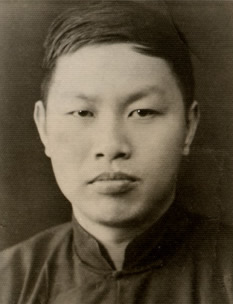
"If I die, I live."
-Edmund, King of East Anglia
And yet, in another statement from his commentary on this text, Westermann points straight to the reason that a post-Christian culture loses its moral confidence in the punishment of murderers. He states: "A community is only justified in executing the death penalty insofar as it respects the unique right of God over life and death and insofar as it respects the inviolability of human life that follows therefrom."
Once those convictions and moral intuitions are lost, the death penalty no longer makes sense. Eventually, even the idea of punishment itself loses all cultural credibility.
"A painful literalism set in, which is hostile to figurative language in speech and to abstract allegory in art. Nowadays we tend to think literally rather than literarily, which explains why Frederick Hart had to portray the American military experience in Vietnam by means of three men of three distinct races—and why a women’s memorial was subsequently added. The fear of leaving someone or something out is hostile to the allegorical impulse, which seeks not to itemize but to generalize, and to speak not specific truths but great truths. It is not surprising that a culture ill at ease with the notion of absolute truth would find it very difficult to make monuments that show urgency and conviction."Full essay...
 "The Maneki Neko is a common Japanese sculpture, often made of ceramic, which is believed to bring good luck to the owner. The sculpture depicts a cat beckoning with an upright paw, and is usually displayed — many times at the entrance — in shops, restaurants, pachinko parlors, and other businesses. Some of the sculptures are electric or battery-powered and have a slow-moving paw beckoning."
Link to article..."If you study and then you wait, tests show that the longer you wait, the more you will have forgotten," Bjork said.But here's the cool part: If you study, wait, and then study again, the longer the wait, the more you’ll have learned after this second study session. Bjork explains it this way: "When we access things from our memory, we do more than reveal it's there. It's not like a playback. What we retrieve becomes more retrievable in the future. Provided the retrieval succeeds, the more difficult and involved the retrieval, the more beneficial it is."